Thursday, October 1, 2009

Thursday, September 24, 2009
Battle of Pharsalus
The battle of Pharlasus was a part of Caesars Civil War against the Senate. On August 9, 48BC the Populares and Optimes forces met in Pharlasus in Central Greece. The Optimes faction was controlled by Pompey and many other Senators, while Caesar controlled the Populares. Caesar was outnumbered more than 2-1 but he still over came and suffered only 1200 casualties compared to the 6000 casualties suffered by the Optimes. After this battle Pompey fled to Egypt where his head was cut off, and the Civil War was almost over as Caesar only had to face Pompey's two sons.
http://video.google.com/videosearch?q=decisive+battles+history+channel&hl=en&emb=0&aq=1&oq=decisive+#
Pyrrhic Victory

A Pyrrhic Victory is a victory that causes devastating loss to the victor. This term is named after King Pyrrhus of Epirus, who suffered many casualties after defeating the Romans at Heraclea in 280 BC and Asculum in 279 BC during the Pyrrhic wars between the Greeks and Romans. In every battle fought with the Romans, the Roman's lost more men but in turn they also had a larger supply of men to draw from. Therefore Pyhrrus lost more men in the long run, and eventually lost the war in the long run. The campaign is described by Dionysius in the following writing:
"The armies separated; and, it is said, Pyrrhus replied to one that gave him joy of his victory that one more such victory would utterly undo him. For he had lost a great part of the forces he brought with him, and almost all his particular friends and principal commanders; there were no others there to make recruits, and he found the confederates in Italy backward. On the other hand, as from a fountain continually flowing out of the city, the Roman camp was quickly and plentifully filled up with fresh men, not at all abating in courage for the loss they sustained, but even from their very anger gaining new force and resolution to go on with the war."
Some modern examples would be the Battle of Bunker (Breed's) Hill during the Revolution in which the Americans killed and wounded hundreds of British soldiers while only losing a few of their own by comparison. Despite all the casualties that the British took, they still took the hill. Another example of a Pyrrhic victory is Napoleon's siege of Moscow. Though he took the city of Moscow, he lost over 1/3 of his army in the venture. This is the ultimate form of a Pyrrhic Victory.
http://en.wikipedia.org/wiki/Phyrric_victory
Mass Grave of Soldiers & Babies Found In Italy

10,000 mass graves have been discovered each containing 15-25 bodies of babies and soldiers who fought against the Carthaginians was found in the ancient Greek Himera in Italy. The burial was uncovered during a recent railway extension. The men of the grave died a violent death, and many still had arrow tips in them. The head historian believes that the remains were from a bloody battle fought there in 480BC described by Herodotus of Halicarnassus. The Greek colony itself served as a trade point for the Phoenician trade routes.
http://news.nationalgeographic.com/news/2008/12/081217-himera-mass-grave.html?source=rss
Help Build 3-D Rome
Ever since 2005 computer scientists at the University of Washington in Seattle have been wondering if they can put together a bunch of photos of a place, and reconstruct into a 3-D model. The technique would help the video game industry, the tourism industry, the movie industry, and preserve places for a lifetime. So after a while the team created a program that could make such a model, and decided to attempt to make a 3-D model of Rome using over 150,000 flckr photos. They have created models of Dubrovnik, Croatia using 57,845 photos already in 22.5 hours and one model of landmarks in Venice using 250,000 photos in 60 hours. The Rome project is still underway.
http://news.nationalgeographic.com/news/2009/09/090924-flickr-rome-build-day.html
Exact Date Pinned to Great Pyramid's Construction?

According to new research by a group of Egyptian scientists the Great Pyramid of Giza's construction began on August 23, 2470AD. The researchers based it off of the appearances of the star Sothis. Every year during the Nile floods, the star Sothis would rise early in the sky after a long absence.This marked the beginning of an inundation period, and all building began at the beginning of the inundation period. The year is marked as so, because this is when King Khufu took power and was supposed to be buried in this tomb. The team believes the Egyptians observed the star from July 17 to 19, and the inundation period began 35 days later—on August 23.
http://news.nationalgeographic.com/news/2009/09/090921-great-pyramid-giza-date-built.html
Who Were The Anglo Saxons?

The Anglo Saxons were a Germanic tribe that came over from Germany during the beginning of the decline of the Roman Empire. They gradually invaded the island of England during the 5th century and eventually settled most of the island. There they made some of the most beautiful crafts during that period such as objects out of gold and enamel, allowed with other literary work such as Beowolf.Not only have they donated so much culture and other important aspects to the English culture, but there language is a direct descent from the English language. Much of their treasures were stolen through constant raiding by the Vikings, and the Saxons themselves were eventually kicked out by the Norman's King William in the 9th century.
http://www.google.com/hostednews/ap/article/ALeqM5jrxpPynTP9X11lpQ63w_J7s0klxQD9ATM94G0
Wednesday, September 23, 2009
Greek Roid Rage

Anabolic steroids did not just get there start recently in baseball or in the Olympics. They started in Ancient Greece to help pump themselves up for the Olympic Games, as they help cell growth rapidly grow. The practice of using Goats Testicles as s use of hormones for the steroids was quite common throughout many of all Greek Olympians. The practice was forgotten after the fall of Greece, but was rediscovered accidentally by German scientists in 1930.
http://hometestingblog.testcountry.com/?p=3684
Archaelogical Site More Than 3300 Years Old Uncovered

An archeological site in the Udaranchamadama area in Embilipitiya, Sri Lanka has been uncovered and the artifacts inside are 3300 years old, the oldest ever found in Sri Lankan history. Some of the artifacts found were grinding stones, painted pots, granite tools, along with other ancient artifacts. Excavations by professional archaeologists are to be completed in about two weeks. The excavation is expected to have found a whole village.
http://trak.in/news/3300-year-old-archaeological-site-discovered-in-sri-lanka/7246/
Monday, September 21, 2009
Ancient ShipWrecks Found

Five Ancient Roman shipwrecks have been recovered off a small Mediterranean island with all of their cargo, including pots, olive oil, kitchen tools, and unidentified glass objects. The ships were submerged in 330 feet of water and were found by archaeological officials scanning in deeper water to look for deep water finds. The ships apparently sank without capsizing. The find also sheds light on the trade routes of Ancient Rome. The largest wreck measured 65 feet.
http://www.mysanantonio.com/news/special_reports/59765452.html
Maecenas

Gaius Maecenas was born April 13, 70BC and died on October 8BC. He was the quasi-culture minister of Augustus, was born of Etruscan lineage, the grandson of Cicero, and took part in the campaigns of Mutina, Philipi, and Perusia. Maecenas was the biggest contributor to Roman poetry in the world. Virgil introduced Horace, Maecenas best poet, to Maecenas after Virgil himself was impressed with. Maecenas also had a famous Hellenistic-Persian gardens on the Esquilline hill on the Servian Wall. Next to it were libraries and the first hot water baths in Rome. His name has become the byword for a wealthy patron.
Sunday, September 20, 2009
Baldwin’s Auction 62 & 63 to Feature Ancient Greek, Roman and Byzantine Coins Print This Article

Baldwin's auction has once again selected a nice collection of Ancient Greek, Byzantine and Roman coins to sell in the United Kingdom.The collection includes a rare Greek Medallion, which is pictured above, and was presumed to have been awarded to Emperor Commodus after his African victory. There are a collection of over 400 lots, some of which include some Anglo Saxon coins, rare English ban notes, Christian VIII gold ducat.Overall this exhibit is bound to be one of the best ancient coin auctions this year.
a href="http://www.coinlink.com/News/ancients/baldwin%E2%80%99s-auction-62-63-to-feature-ancient-greek-roman-and-byzantine-coins/"
Saturday, September 19, 2009
A Three-Day Battle In 30 Minutes

A reenactment of Hermann's Battle, a.k.a., the Battle of Teutoburg Forest, is taking place in South Central Minnesota. About 100 reenactors are taking part in the 9 A.D. battle between Roman legionaries and Germanic Barbarians. The equipment for roman style equipment is about $2,000 while the German equipment is somewhere in the same range. The reenactment will take part in 12 scenes, and the experience will be enhanced with sound effects of clashing swords and will be projected through KNUJ radio based in the same town as the reenactment, New Ulm. They said that they reenacted this specific battle because it was one of the turning points in the decline of expansion into Germany.
http://www.mankatofreepress.com/local/local_story_262003633.html
Tuesday, September 15, 2009
Ki Animation Using Structuralism
Proairetic:The title comes on with circles surrounding it along with people coming in and out. A mother gives birth to a baby. The baby is born into a room surrounded by many people, and the people place a key around his neck and him in a cage. The baby crawls down the middle of a street with people walking on both sides, and grows into a child. The child swings in a cage and walks down the street once again. The people go in and out. HE gets married and they go into a room and close the caged door. They are in bed and then it goes to a bumpy road. HE walks down the middle of the road again and he grows into an old man. He sits on a park bench surrounded by a barred fence. He is surrounded by people in his grave and his key is taken away.
Hermeneutic: The squares, circles people standing around at birth and death, the two people coming in and out of the screen.
Semic: The study here perhaps would be the key's knowledge, which it holds about life.
Symbolic: The, again, key perhaps signifies the burden of life that he carries around everywhere that he goes.The circle represents the circle of life. The people going in and out represents people dying and being born.
Reference: In the beginning he has no key and is free and at the end he is dead and is free fro the key. The beginning of life and death are the allusions in this much as like when the grinch went down in the beginning and end of the story.
Diagetic: The direction that he goes into is a downward one, because he starts out great with the beginning of life but ends up with death, which is ultimately a downer.
Monday, September 14, 2009
Carmina 1.1
Maecenas atauis edite regibus,
o et praesidium et dulce decus meum,
sunt quos curriculo puluerem Olympicum
collegisse iuuat metaque feruidis
euitata rotis palmaque nobilis 5
terrarum dominos euehit ad deos;
hunc, si mobilium turba Quiritium
certat tergeminis tollere honoribus;
illum, si proprio condidit horreo
quicquid de Libycis uerritur areis. 10
Gaudentem patrios findere sarculo
agros Attalicis condicionibus
numquam demoueas, ut trabe Cypria
Myrtoum pauidus nauta secet mare.
Luctantem Icariis fluctibus Africum 15
mercator metuens otium et oppidi
laudat rura sui; mox reficit rates
quassas, indocilis pauperiem pati.
Est qui nec ueteris pocula Massici
nec partem solido demere de die 20
spernit, nunc uiridi membra sub arbuto
stratus, nunc ad aquae lene caput sacrae.
Multos castra iuuant et lituo tubae
permixtus sonitus bellaque matribus
detestata. Manet sub Ioue frigido 25
uenator tenerae coniugis inmemor,
seu uisa est catulis cerua fidelibus,
seu rupit teretis Marsus aper plagas.
Me doctarum hederae praemia frontium
dis miscent superis, me gelidum nemus 30
Nympharumque leues cum Satyris chori
secernunt populo, si neque tibias
Euterpe cohibet nec Polyhymnia
Lesboum refugit tendere barbiton.
Quod si me lyricis uatibus inseres, 35
sublimi feriam sidera uertice.
7-10
This, if turmoil vies for the the power
of the sails of the Quirites;
That, if whoever stores and sweeps
away on the floors of Libya.
Saturday, September 12, 2009
Another Historic Day on Sept. 11

Approximately 2000 years ago three Roman legions consisting of over 15,000 men formed up in a rainy valley. The Germans, then moved in quickly from both sides of the valley from the woods, and crushed the legions killing an/or enslaving over 15,000 men while only a few escaped. When news would reach Emperor Augustus he would state perhaps one of the most famous quotes from his reign of emperor, "Quintillus Varus, Give me back my legions!" The question that is raised most often, perhaps, is why Varus would even think of marching single file through a wooded valley in hostile German territory. The answer is a little thing called trust. A man named Arminius who had been an administrator to the region for a short time told Varus there was a rebellion in a village nearby and that he would lead Varus' troops there. Arminium also had a dream though of uniting the twelve tribes of Germany. If Varus' had not been defeated all the lands up to the Slavs would be speaking a Romantic language. This very much parallels to a date pretty familiar to this. Just like the Germans who assimilated to the Roman culture far away in Germany, they still had hard feelings against their Roman conquerors. Just because the people from very different who assimilate to our culture, doesn't mean they like us. Perhaps we can learn from this diplomatic mistake and use it to our advantage carefully.
http://www.huffingtonpost.com/michael-kaplan/a-never-ending-battle_b_283138.html
Friday, September 11, 2009
Augustan Age
Caesar's Assassination
Tillius Cimber had come to Caesar in the Senate Chamber to ask for him to repeal the exile on his brother. He then grabbed Caesar's tunic, and along with other Senators stabbed Caesar 23 times and killed him. Afterwards, Brutus went out to the Roman people and proclaimed "We are now free!" Marc Antony the displayed a wax statue of Caesar's stabbed body in the forum and the people quickly became enraged, burning the forum and other neighboring buildings. Five civil wars would soon ensue and the formation of the Roman Empire would begin with the fall of the Roman Republic.

War with the Tyrannicides
On November 26 43 BC the Second Triumvirate was formed with Octavian, Marc Antony, Marcus Aerulius Lepidus. It was formed to kill Caesar's assassins, to secure the empire. The battle of Phillipi in Macedonia followed in 42 BC between Octavian and Marc Antony's against Caesar's assassins. Here on the plains of Phillipi, the army of Brutus and Cassi-us was utterly defeated, and the Tyrannicides were vanquished from then on out. Antony controlled the east and Octavian returned to Italy to control Rome.

The War With Antony
While Antony's war in Parthia had turned utterly chaotic, Octavian offered 2,000 legionaries to him to replenish his troops. Antony on the other hand though declined, and turned to Cleopatra for help as she had more troops and was in an affair with him already. Octavian then spread propaganda that Antony was no longer a Roman but more of an Egyptian, and also said that he would step down as triumvirate if Antony would to which Antony declined. All this played in Octavian's favor as the Senate backed him in war against Antony in 32 BC, and gained a major victory in the naval battle of Actium in 31 BC. Antony then returned to Egypt and committed suicide by sword and Cleopatra by snake bite.

Battle of Actium
The Battle of Actium was fought between Octavian's fleet and Cleopatra and Marc Antony's fleet on September 2 31BC. Marcus Agrippa was the naval commander for Octavians fleet backed Antony's fleet back into the Arcanian coast, forcing him to fight. Both of the forces had about the same strength, but Antony's forces were severely weakened from a strong bout of malaria started about a week before the battle. Being surrounded though, Antony's ships did not have much movement room and this along with the failed use of grapples cost them dearly. Antony eventually saw a gap in Agrippas fleet and sped through it leaving his army to fend for itself.

Construction of the Forum of Augustus
The start of the idea of the new forum began with Octavian promising that he would build a new temple to honor the god Mars during the Battle of Philipi in 42BC. When he became emperor in 27 BC he plaaned for the temple to be built in a new forum named after himself. The construction of the new forum began in 20BC, at the same time recovering the standards lost to the Parthians by Crassus. His plans were altered slightly as he ran into the problems of land owners owning the plot of land he wanted to build the forum on. He did not take the land though, but worked around it which in the long run saved him costs and made him look like a valiant man of the people. The forum was constructed around 2BC.

The Campus Martius
The Field of Mars was 490 acres of publicly owned land, and during the Middle Ages was the most populous region of Rome. The land was once owned by the last king of Rome but was taken away during the establishing of the Republic. Pompey built the first stone theatre, the Curia Hostilia, in 52BC which was used for some Senate meetings and was also the place Julius Caesar was murdered. During Augustus reign it was divided into 14 regions. The Baths of Agrippa were built out of the original swampy ground, the Aura Pacis was built to signify peace between the Senate and Augustus, the Pantheon was also built there and later rebuilt by Hadrian, and the Mausoleum of Augustus was built in the unpopulated part of the land for Caesar's future burial ground to help endure his legacy throughout the ages.

Augustus' Death
Augustus adopted Gaius and Lucius Caesar as his two sons to become his apparent heirs, as he could bear none of his own brood. Unfortunately for Augustus though both his adopted sons died along with his brother Drusus. Tiberius in turn was adopted by Augustus and named the heir to the Roman Empire. The only other option was Postumus Agrippa, whom Augustus officially disowned on 7AD. On August 19 14AD Augustus died visiting the place of death of his father. His last words were "Have I played the part well?-Then applaud my exit." He was cremated on a pyre close to his mausoleum and joined the gods in the Pantheon.

Tillius Cimber had come to Caesar in the Senate Chamber to ask for him to repeal the exile on his brother. He then grabbed Caesar's tunic, and along with other Senators stabbed Caesar 23 times and killed him. Afterwards, Brutus went out to the Roman people and proclaimed "We are now free!" Marc Antony the displayed a wax statue of Caesar's stabbed body in the forum and the people quickly became enraged, burning the forum and other neighboring buildings. Five civil wars would soon ensue and the formation of the Roman Empire would begin with the fall of the Roman Republic.

War with the Tyrannicides
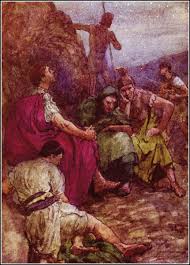
On November 26 43 BC the Second Triumvirate was formed with Octavian, Marc Antony, Marcus Aerulius Lepidus. It was formed to kill Caesar's assassins, to secure the empire. The battle of Phillipi in Macedonia followed in 42 BC between Octavian and Marc Antony's against Caesar's assassins. Here on the plains of Phillipi, the army of Brutus and Cassi-us was utterly defeated, and the Tyrannicides were vanquished from then on out. Antony controlled the east and Octavian returned to Italy to control Rome.
The War With Antony
While Antony's war in Parthia had turned utterly chaotic, Octavian offered 2,000 legionaries to him to replenish his troops. Antony on the other hand though declined, and turned to Cleopatra for help as she had more troops and was in an affair with him already. Octavian then spread propaganda that Antony was no longer a Roman but more of an Egyptian, and also said that he would step down as triumvirate if Antony would to which Antony declined. All this played in Octavian's favor as the Senate backed him in war against Antony in 32 BC, and gained a major victory in the naval battle of Actium in 31 BC. Antony then returned to Egypt and committed suicide by sword and Cleopatra by snake bite.

Battle of Actium
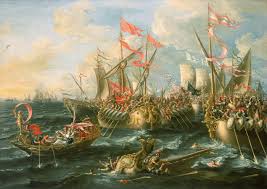
The Battle of Actium was fought between Octavian's fleet and Cleopatra and Marc Antony's fleet on September 2 31BC. Marcus Agrippa was the naval commander for Octavians fleet backed Antony's fleet back into the Arcanian coast, forcing him to fight. Both of the forces had about the same strength, but Antony's forces were severely weakened from a strong bout of malaria started about a week before the battle. Being surrounded though, Antony's ships did not have much movement room and this along with the failed use of grapples cost them dearly. Antony eventually saw a gap in Agrippas fleet and sped through it leaving his army to fend for itself.
Construction of the Forum of Augustus
The start of the idea of the new forum began with Octavian promising that he would build a new temple to honor the god Mars during the Battle of Philipi in 42BC. When he became emperor in 27 BC he plaaned for the temple to be built in a new forum named after himself. The construction of the new forum began in 20BC, at the same time recovering the standards lost to the Parthians by Crassus. His plans were altered slightly as he ran into the problems of land owners owning the plot of land he wanted to build the forum on. He did not take the land though, but worked around it which in the long run saved him costs and made him look like a valiant man of the people. The forum was constructed around 2BC.

The Campus Martius
The Field of Mars was 490 acres of publicly owned land, and during the Middle Ages was the most populous region of Rome. The land was once owned by the last king of Rome but was taken away during the establishing of the Republic. Pompey built the first stone theatre, the Curia Hostilia, in 52BC which was used for some Senate meetings and was also the place Julius Caesar was murdered. During Augustus reign it was divided into 14 regions. The Baths of Agrippa were built out of the original swampy ground, the Aura Pacis was built to signify peace between the Senate and Augustus, the Pantheon was also built there and later rebuilt by Hadrian, and the Mausoleum of Augustus was built in the unpopulated part of the land for Caesar's future burial ground to help endure his legacy throughout the ages.

Augustus' Death
Augustus adopted Gaius and Lucius Caesar as his two sons to become his apparent heirs, as he could bear none of his own brood. Unfortunately for Augustus though both his adopted sons died along with his brother Drusus. Tiberius in turn was adopted by Augustus and named the heir to the Roman Empire. The only other option was Postumus Agrippa, whom Augustus officially disowned on 7AD. On August 19 14AD Augustus died visiting the place of death of his father. His last words were "Have I played the part well?-Then applaud my exit." He was cremated on a pyre close to his mausoleum and joined the gods in the Pantheon.

Carmina 1.37
Nunc est bibendum, nunc pede libero
pulsanda tellus, nunc Saliaribus
ornare puluinar deorum
tempus erat dapibus, sodales.
Antehac nefas depromere Caecubum 5
cellis auitis, dum Capitolio
regina dementis ruinas
funus et imperio parabat
contaminato cum grege turpium
morbo uirorum, quidlibet impotens 10
sperare fortunaque dulci
ebria. Sed minuit furorem
uix una sospes nauis ab ignibus,
mentemque lymphatam Mareotico
redegit in ueros timores 15
Caesar, ab Italia uolantem
remis adurgens, accipiter uelut
mollis columbas aut leporem citus
uenator in campis niualis
Haemoniae, daret ut catenis 20
fatale monstrum. Quae generosius
perire quaerens nec muliebriter
expauit ensem nec latentis
classe cita reparauit oras,
ausa et iacentem uisere regiam 25
uoltu sereno, fortis et asperas
tractare serpentes, ut atrum
corpore conbiberet uenenum,
deliberata morte ferocior:
saeuis Liburnis scilicet inuidens 30
priuata deduci superbo,
non humilis mulier, triumpho.
Now is the time for drink, now is the time to strike and walk
freely among the earth;Now is the time to be lively and feast
at the chair of the God Salia, and be sociable.
Before this time, to bring Caecubun wine from our ancestor's
cellars was sinful, while the queen brought destruction to Capitoline
Hill and ruined the empire.
Wednesday, September 9, 2009
History of the Word "Home"
"O.E. ham "dwelling, house, estate, village," from P.Gmc. *khaim- (cf. O.Fris. hem "home, village," O.N. heimr "residence, world," heima "home," Ger. heim "home," Goth. haims "village"), from PIE base *kei- "to lie, settle down" (cf. Gk. kome, Lith. kaimas "village;" O.C.S. semija "domestic servants")."(Dictionary.com)
Different uses throughout history: The word "homing" originated in 1875, the word "homebody" is from 1821, the word "homemade" is from 1659, the word "homeland" is from 1670, the word "homeless" is from 1615, and the word "homespun" is from 1590.
Different uses throughout history: The word "homing" originated in 1875, the word "homebody" is from 1821, the word "homemade" is from 1659, the word "homeland" is from 1670, the word "homeless" is from 1615, and the word "homespun" is from 1590.
Friday, September 4, 2009
Tuesday, September 1, 2009
Horace in the Army & Education
His father was a farmer who saved money for his education where Horace himself later went to Rome for his primary education and later to Athens to study Greek philosophy. After the assassination of Julius Caesar, Horace joined the ranks as a staff officer in Brutus' army. Horace fought in the battle of Phillip, and later wrote that the only reason he lived was because he threw down his shield and sword and ran. He later returned to Italy after amnesty was granted by Augustus, and found his estate confiscated along with his father being dead.
Monday, August 31, 2009
1.11
You do not question (our knowing is wrong) why me, why you
disgrace the boundaries of the gods, Leuconoe,
the Babylon trials are numerous. It is much better to endure evil!
Whether it is the final winter or not by Jupiter,
what now delays the Tyrrenuen Sea which opposes,
wise, briefly bring out the wine and walk around.
While we have spoken time passes: Seize the day,
and have little trust tomorrow.
Friday, August 28, 2009
Book Review: Persepolis
The graphic novel Persepolis was one of the most interesting foreign novels I have ever read. Not only did this novel, written by Marjane Satrapi, give a person in-depth look at the build up and happening of the Islamic revolution, but it did so with by looking through an child's eyes, which looks at the little details in their small part of the world rather than the whole big picture. By focusing on what was happening to herself, friends and family. By doing this she didn't polarize her writing on just the good outcomes or even the bad outcomes of the revolution, but focused on both; although most of the events she went through were mostly horrible to the point where she had to leave, some good things happened such as the fall of the Shah. By painting the reader a picture of what life was like in a child's house and neighborhood, Satrapi was able to feed complex and vital information about the Islamic revolution in a simple and readable format. Overall Satrapi created a marvelously creative novel.
If I was in the speaker's shoes during the time that the Islamic Revolution took place. I probably would have been on the first flight out of the country, and definitely would not have be as brave as he was to stick around that long. To be betrayed by his own country must have felt, and must still feel horrible and disgusting. I also probably would have been protesting against the newly placed Islamic regime much like the Iranians are during the elections today. The speaker was a very brave man by staying in Iran during the revolution, especially since he had been educated in a despised America.The speaker has my respect.
If I was in the speaker's shoes during the time that the Islamic Revolution took place. I probably would have been on the first flight out of the country, and definitely would not have be as brave as he was to stick around that long. To be betrayed by his own country must have felt, and must still feel horrible and disgusting. I also probably would have been protesting against the newly placed Islamic regime much like the Iranians are during the elections today. The speaker was a very brave man by staying in Iran during the revolution, especially since he had been educated in a despised America.The speaker has my respect.
Ancient Rome Comes to Life at Pyramid Hill

On this labor day weekend, Roman history will come to life in Pyramid Hill Cincinnati as the Roman Legion XXII PR will set up camp. This particular legion portrays a Roman legion from the 1st century A.D. The group will also be portraying civilians, gladiators, merchants, and statesmen and will stay in character throughout the entire weekend.
http://rodeo.cincinnati.com/getlocal/gpstory.aspx?id=100224&sid=153481
Thursday, August 27, 2009
Horace
From what it seems like I think Horace's poems will be about the qualms of everyday life, but mainly about tragedy as his father died when Horace was so young.
Monday, June 8, 2009
Battle of Alesia Part III

The Gauls attacked today from both sides and were successful on one part where the wall could not be completely built. The Gauls were about to break through but Caesar's cavalry of about 6,000 broke through and attacked from the flank. The Gauls fled and Caesar won. Vercingetorix surrendered, and the Romans had complete control of Gaul.
Battle of Alesia Part II
Today The second force of about 250,000 Gauls surrounded Caesar from behind. Caesar quickly built another wall from behind him to keep the attackers from attacking his rear. What did not realize though is that he has barricaded himself within his own walls, making it impossible for him to get out. He himself is now the one who is besieged. 
The Gauls have continuously pounded the Romans but have been unsuccessful in breaking through. They have though significantly weakened the Roman troops inside.

The Gauls have continuously pounded the Romans but have been unsuccessful in breaking through. They have though significantly weakened the Roman troops inside.
Battle of Alesia Day I
Today Caesar and his army of 60,000 Roman Legionaries arrived at the city of Alesia, where the Gallic general Vercingetorix is staying with his armed force of 80,000. Caesar and his men quickly took the initiative and surrounded the large Gallic force. Caesar, not wanting to commit his troops to an all out suicidal attack on the force, besieged the Gails and built an 18 kilometer long wall 4 meters high.

The Gauls continuously raided the soldiers as they worked on the wall, but were unsuccessful as the Gallic auxiliary cavalry proved successful in defense.

The Gauls continuously raided the soldiers as they worked on the wall, but were unsuccessful as the Gallic auxiliary cavalry proved successful in defense.
Final Exam Part II
I. Gaul is divided into three parts, one of which we know include the Belgae, along with the Aquitani, 30 languages who call themselves the Celts, and our Gauls. All of the languages, institutions, and laws are different. The Garmun separates the Galls from the Aquatani, and the Matrona and Sequanis separate them from the Belgians. The strongest out of all of these the Belgians are the strongest, but their province is cut off from the ours, and merchants often do not go to them and carry things which would effeminate the spirit, and they are the closest to the Germani, who live across the Rhine river, with whom they perpetually wage war, for what reason the Helvetii also surpass the rest of the Gauls in valor, as they contend with the Germani are in war daily , whether they repel them from their territories, or wage war themselves on own land. The one part of all this, which the Gauls occupy, the start of the Rhone begins; This is surroundedby the Garonn river, the ocean, and the territories of the Belgae; it b, toooudaries, on the side of the Sequani and the Helvetii tribes, and on the river Rhine, it stretches to the north. The Belgae are raised from the territory of the Gauls, and extend in the lower part of the Rhine river, and look to the north and sun which is rising. The Aquitania tribe goes from the Garonne river up to the Pyrenaean mountains and the ocean part of which Hipania is near. This looks at the north star and the setting sun.
X. Caesar then says again that the Helvetii had the good spirit to march through the land of the Sequanorum and Haeduorum tribes and into the borders of the Santonum tribe, which is not far away from the boundary of the Tolosatium province, which is a civilization in the Roman Province. If it was done, he would see a huge perilous future for Province by the hostile men, who were unfriendly to the people of Rome, having been bordering a place that lay in a region so full of grain.In that place the Ceutrones and Graeocili and Caturigus occupied the higher ground and held back and endeavor that was to be undertaken by the army. Many of his men were beaten in the battle by the Ocelo, who were moved from the outermost of the province, were moved to the border of the Province on the seventh day on which they did arrive; From that place in border Allobrogum, from Allobrogum the army was led into the Segusiavos. They lived on the border of the first crossing of the Rodanum river.
XI. The Helvetii were now through the straight and border of the Sequanis and arrived out the border of the Haedorum and ravaged the land. The Haeduorum, with not being able to defend themselves, they sent a dispatch to request aide from Caesar: And so they said that they were deserving of the Romans and should see an army sent to our land to be deprived of the people, freeing [them] in them removing slavery, purging them and not holding back. At the same time the Haeduorum Ambarii,
Final Exam Part I
Part One Parsing Book I.I-XIV
1. est- 3rd person singular indicative present of "sum" meaning "to be"
2. dividit- 3rd person plural indicative active of "divia" meaning "to divide"
3. sunt- 3rd person plural indicative present of "sum" meaning "to be"
4. gerunt- 3rd person plural indicative active perfect of "gero" meaning "to carry"
5. capit- 3rd person plural indicative active present of "capeo" meaning "to capture"
6. pertinet- 3rd person singular indicative active future of "pertineo" meaning "
7. esse- 3rd person singular indicative perfect of "sum" meaning "to be"
8. constituterunt- 3rd person plural indicative active perfect of "constituo" meaning "to constitute"
9. pursuadet- 3rd person singular indicative active future of "pursua" meaning "to persuade"
10. occuparet- 3rd person plural indicative active future of "occupare" meaning "to occupate"
11. esset- 3rd person indicative singular active future of "esse" meaning "to be"
12. possent- 3rd person indicative future of "posse" meaning "to be"
13. facio- 2nd person singular present indicative active of "facere" meaning "to make"
14. confirmat- 3rd person plural indicative active of "confirma" meaning "to confirm"
15.occupato- 2nd person plural indicative active present of "occupo" meaning "to occupy"
16. posse- 3rd person singular present active of "possum" meaning "to be"
17. erant- 3rd person plural indicative perfect of of "sum" meaning "to be"
18. essent- 3rd person singular indicative pluperfect of "esse" meaning "to be"
19.exeant- 3rd person plural indicative active perfect of "exeo" meaning "to destroy"
20. impendebat- 3rd person plural indicative active imperfect of "impendeo" meaning "to impend"
21. exeant: 3rd person plural present subjunctive active of "exio" meaning "to go out"
22. Persuadent- 3rd person plural indicative pluperfect of "pursua" meaning "to persuade"
23. Fuisset- 3rd person pluperfect subjunctive active singular of sum" meaning "to be"
24. pervenit- 3rd person indicative active perfect singular of "perveneo" meaning "to prevent"
25. fluit- 3rd person indicative active perfect singular of "fluo" meaning "to flow"
26. conveniant- 3rd person singular indicative active pluperfect of "convenio" meaning "to convene"
27. existimabant- 3rd person indicative passive imperfect
28. comparatis- 3rd person singular subjunctive active imperfect of "caomparare" meaning "to compare"
29. facere- 3rd person subjunctive active imperfect of "facio" meaning "to make"
30. Timeret- 3rd person plural imperfect subjunctive active singular of "timeo" meaning "to be afraid"
31. convenirent- 3rd person singular plural indicative pluperfect of "convenere" meaning "to convene"
32. Vellet- 3rd person singular imperfect subjunctive active singular of "volo"meaning "to wish"
33.Sint- 3rd person singular present subjunctive active of "sum" meaning "to be"
34. habebat- 3rd person singular indicative active imperfect of "habeo" meaning "to have"
35.Pertinere- 2nd person singular present imperfect active of "pertineo" meaning "to reach"
36. duxerat- 3rd person singular indicative active present of "duxo" meaning "to lead"
37. respondit- 3rd person indicative active of "respondo" meaning "to respond"
38. demonstrant- 3rd person singular indicative active pluperfect of "demonstro" meaning "to demonstrate"
39.discesit- 3rd person singular perfect indicative active singular of "discedo" meaning "to go apart"
40. consumptis- 2nd person singular indicative active present of "consumptuo" meaning "to consume"
41.Obsido- 2nd person singular future indicative active of "obsido" meaning "to invest"
42. transierat- 3rd person singular indicative active present of " transiero" meaning "to transport"
43. Vexassent- 3rd person singular pluperfect subjunctive active of "vexo" meaning "to shake"
44. contenderent- 3rd person singular indicative active present of "contendo" meaning "to contend"
45. Accipere- 2nd person singular present imperative passive singular of "accipio" meaning "to take"
46. Putaret- 3rd person imperfect active singular of "puto" meaning "to think"
47. facto- 2nd person singular indicative active present of "facere" meaning "to make"
48.gloriarentur- 3rd person singular imperfect subjunctive active of "glorior" meaning "to boast"
49. policeantur- 3rd person present subjunctive passive of "polliceor" meaning "to offer"
50. accidesent- 3rd person singular pluperfect active subjunctive of "accido" meaning "to fall upon"
Nouns
1. Gallia- masculine nominative singular
2. partes- accusative plural
3. Aquitani- masculine nominative plural
4. Germanis- masculine nominative plural
5. Belgis- masculine nominative plural
6. Sequansa- neutered nominative singular
7. Matrona- neutered nominative singular
8. Helvetii- masculine nominative plural
9. Garumna- neutered nominative singular
10. Rhodano- neutered nominative singular
Friday, June 5, 2009
Ancient Creatures Survived Arctic Winters

Flowering plants and hippo-like creatures once roamed the arctic tundra where polar bears now prevail. Archeological work is now being done to uncover the mystery that once shrouded the creatures from over 53 million years ago on Canada's Ellesmere Island. Fossils of aquatic turtles, giant tortoises, snakes and even flying lemurs have been discovered. The dig is still underway.
http://www.msnbc.msn.com/id/31128198/
Italian Archeologists Find Commoner’s Neighborhoods In Persepolis

An Iranian-Italian archaeological team has discovered the first traces of urban settlement in Persepolis. Construction of the city began in 520 B.C. under Darius the Great, and lasted almost 70 years. The team found evidence that common people lived in the beginning construction of the city, and this is a huge find. these people probably worked for the emperor during construction and when the emperor actually settled into the city itself.
http://www.adnkronos.com/IGN/Altro/?id=3.0.3397053272
Gladiator Helmet On Show In Melbourne

A 2,000 year old gladiator helmet will be the center piece of a Pompeii exhibit in Melbourne, Australia. The exhibition, which is called 'A Day In Pompeii', will start on June 26. The helmet, made of bronze, belonged to a Murmillo gladiator, which was also the most heavily armed of gladiators. The show also includes 250 other pieces from Pompeii.
Sarcophagus On View At Toledo Museum of Art
A Roman sarcophagus that was built about 2,000 years ago is on display at the Toledo Museum of Art. The 53 inch long marble coffin weighs more than 400 pounds and was purchased from a Cleveland family last year, who had it in their family for generations. The show continues through June 13.
http://toledoblade.com/apps/pbcs.dll/article?AID=/20090604/ART01/906040304/-1/ART03
http://toledoblade.com/apps/pbcs.dll/article?AID=/20090604/ART01/906040304/-1/ART03
Nostradamus 2012

According to Nostradamus, the world will end on December 21, 2012. Not only has Nostradamus predicted it, but the Mayans, Chinese, and Christian's have as well. According to the Mayan calendar the alignment of the planets, which happens every 640,000 years, will bring the world to an end on the winter solstice. The website for Human Continuation predicts human destruction at 94%. According to scientists across the globe though, the only thing that will be ending is autum.
http://www.freep.com/article/20090604/FEATURES01/906040371/1025/FEATURES/According+to+the+Mayans++the+world+will+end+in+2012
Roman Reeinactments In Italy
Commemorazione della fondazione di Roma con legionari, vestali, gladiatori senatori e altro.
Translates To:
Commemoration of the founding of Rome by legionaries, Vestal Virgins, senators and other gladiators.
Rome Opens Up Underground Wonders of the Ancient World to Tourists

The city of Rome has recently just opened dozens of previously unseen underground sites. These sites include the Ludus Magnus, the Santa Rosa at the Vatican, and other important history sites. Tours begin on Monday, June 8.
http://www.timesonline.co.uk/tol/news/world/europe/article6345753.ece
Thursday, June 4, 2009
Where Pizza Got Its Start

Pizza has long been the most successful food export in Italy, and has even gained popularity and its own different styles in the United States. The word pizza first appeared in 997 B.C. in Medieval Latin text. There was such a flat bread, which is the foundation of the pizza, that is mentioned in Ancient Greek texts called plakous, that was covered in herbs, garlic and other toppings such as these. The Persians under Darious also had a kind of bread like this that they would cook on their shields. Perhaps pizza didn't originate in Italy after all, but was perfected as it was handed down from nationto conquering nation over the ages.
Wednesday, June 3, 2009
Wedding Traditions Much Like Today

We have retained many of the same wedding customs as the Romans did all the way back over 2,000 yeas ago.Instead of the bride and groom doll figures you would have figures of Venus and Minerva, you would also have a small no yeast bread type of thing or honey instead of a cake, and instead of throwing rice at the bride and groom as they exited the ceremony you would throw nuts at them like elephants at the zoo.
http://www.examiner.com/x-7160-Sacramento-Nutrition-Examiner~y2009m6d2-What-healthy-lowcost-food-to-serve-at-an-ancient-Roman-toga-party-or-wedding
What I'd be Playing if I Was A Roman Kid

If I was a kid in Rome right now, I probably would not be gaming with my friends on xbox live. Instead I would probably be gambling with dice or playing marbles and knuckles with sheep vertebrate. I could even play checkers, play a ball game, or even go to the local amphitheater to see a show. Yep, it would definitely different than it is today.
Tuesday, June 2, 2009
Ancient Steroids

Think steroid use has only happened lately in the pas couple of year? Well think again, because Ancient Greeks used goat testicles as a boost of testosterone before games. Galen, a Greek physician of the era, advised athletes to eat "the rear hooves of an Abyssinian ass, ground up, boiled in oil, and flavored with rose hips and rose petals."
http://www.mlive.com/sportsflash/index.ssf?/base/sports-30/1243364483305550.xml&storylist=sports
StolenRroman Artifact Found In Christies' Auction House
A Corinthian Column Krater was found at Christies' Auction House today on June Second. The pottery dates back to 570 B.C., and its name is derived from its small handles which look like Corinthian columns. The person believed to have introduced the piece is Ciacomo Medici in 1985. In vestigation is under way.
http://www.imperialvalleynews.com/index.php?option=com_content&task=view&id=5765&Itemid=2
http://www.imperialvalleynews.com/index.php?option=com_content&task=view&id=5765&Itemid=2
Paint Attack On Ara Pacis Meuseum

The building, the Ara Pacis which is made of stone glass, came under paint attack on June First by vandals. The building which houses Augustas' altar of peace, which is considered to be the first piece of modern architecture, has been under heavy fire to be torn down. Talks with the mayor have begun to see if a renovation or reconstruction can occur. The vandals have yet to be caught as the case is still under investigation by the Italian Police.
http://www.ansa.it/site/notizie/awnplus/english/news/2009-06-01_101300044.html
Monday, June 1, 2009
Did You Know...China Destroyed All Marine Life????

A huge volcano in China named Tungurahua erupted some 260 millions years ago and destroyed all marine life of many species in the area. The huge layer of fossil recently discovered contains many different fossilized and extinct species. Half a kilometers of lava. The report is to be finished soon.
Caesar Coins

This coin says the Ides of March, which is when Caesar was assassinated.

This coin translates to Caesar, and it commemorates his many victories against Gaul.

This coin says Caesar ad commemorates his victory over Pompey at the battle of Pharsalus.
Subscribe to:
Posts (Atom)
