Now is the time for drinking, now is the time to beat your
foot against the measure, now is the time to ornate the feast
couch of the god Saliaribus, friends.
Before this it was moreover a sin to take down the Concubine,
Whose queen threatened to burn down the capital to ruins with
Her prepared power
and contaminating swarm of disease, and by hopes
sweet Fortunes salts would happen. But one small
Boat would escape the fire, sailing from the rough seas
And made mad by the Maerotic grape she fell back in
fear of Caesar, pursued through Italy
By the fatal omens. Of noble birth without woman's anxiety
She drove her fleet to flee with commands not to be ever spoken of,
Strictly and seriously she stood like a queen, being strong she
harshly took the snake, which took the last drink from her body,
Deliberately killing her soul; it is certain we took the eye of Libernus
(an evil eye) against her as she was no humble slave, nor a woman, but a Roman Hero.
Poetry is a form of art that has been around for millennia, and it has only expanded since its origins during the dawn of language itself. Poetry can be carried out in various forms of readings whether they be through sight reading, reading aloud, singing through music, or even acting them out through theatre. All of these various forms of emitting the main message of the poem are equally right in the way that they are done. Poetry was initially the way of telling stories to the younger generation as a way of getting them to remember and understand the stories that were being told. All of the Greek histories were told through poems and said aloud for people memorize and tell all who had not heard the story yet. Some of the most famous quotes and sayings weren't just discussed in a normal conversation, they were rather said in times of despair or pressured situations where the author conjured a most graceful sentence or two to present grace to a dire situation. If quotes such as these had presented themselves in a normal situation, they would not have become as famous as they are today and surely would not have been remembered. This example is also very similar to that of Horace's poem 1.37 where a very dire situation was taking place throughout the empire but was eventually solved through Caesar's conquering of Marc Antony and Cleopatra. His poem exerts a message of celebration but also mourning as he shows the Roman side of the victory but also a part of the Egyptian side, who had been conquered. Through this method he creates an entertaining an very thorough account of the unification of the Roman Empire under Augustus. Poetry, like a piece of artwork, cannot casually be told by one person to another, instead it must be displayed for all to see and truly understand the author's true meaning so that everyone may remember what happened.
If Horace would have casually told the story, as opposed to writing it in a poetic form, he most likely would not have received acclaim or recognition that he did after he published it, unlike Maecenas who wrote in a plain tone during his entire multiple volume of books. Horace begins his poem by initially celebrating the victory that they have just scored against Antony's forces and Cleopatra. He says that this victory causes a time for celebration, music, and even a call for the feast at the couch of Saliarbus. He then goes on to account the destruction that Cleopatra and her uncivilized horde almost caused to the Roman people and capital, but fortunately Caesar was there to save them and Roman civilization. He describes her initially as a whore who was grieved with power and used all that she had, but by misuse. Her power came to an end through a great sea battle (Battle of Actium) where she and Antony were the only ones to escape, which shows that she abandoned her people like an evil queen . He then changes tone as he starts to call her misunderstood as she had no mother during her childhood, and once she recognized her folly she honorably took her own life. For doing this Horace ordains her a true Roman hero.
There is one large parallel in Horace 1.37, and that is the contrast between the beginning and end of the poem. Without the poetic form of Horace's writing, the true essence of what he is trying to describe Cleopatra as could not be accomplished. In the beginning of the poem he describes Cleopatra as a power hungry whore who does not know how to use her power and rather misuses it to destroy the upright Roman civilization. For this, she must be utterly destroyed. She then disgraces herself even more as she leaves her soldiers behind to save herself. After this, though, Horace's tone changes and he describes her as a Roman hero for not panicking and excepting her mistakes and standing strong in her suicide. These contrasts serve the true tone of the poem.
The connotations delivered in Horace are that of things are not what they seem. Without being able to imagine or see Horace's words in your head, one would not be able to grasp the idea that there is such a stark contrast between the good and the bad of Cleopatra. When Horace first describes Cleopatra, he is describing her in the eye of a typical Republican Roman who wishes to uphold the Republic at all costs, therefore casting Cleopatra as an evil person in their eyes. When he finishes berating her, he then praises her for what the Roman's cast as an idolized Roman Hero in Roman society. This shows that people who hold such ideals so close to them become blind with rage and cannot see what they really idolize is what they hate. What they hate, though, is also what they fear and therefore they cannot truly understand the true stoicism and heroism of their enemy when facing death. This also shows that enemies are also always cast in the eye of evil no matter how close to the morals and principles of Roman civilization may be held by the enemy. The true eye of propaganda is drawn up by this poem and shown in its true light to the public.
Symbols in the poems also give off more information than is actually said in poetry, whereas if one were to just casually say or refer to a symbol to another person it would not make sense to the person. One such symbol is the couch of Saliaribus, which he uses to symbolize the victory over the Egyptians. This couch was only used for great feasts to celebrate only the greatest of victories over the Roman's enemies. The couch is used to symbolize how great a victory this really is. The Maerotic grape is also another symbol as it shows the better quality of Roman goods over Egyptian goods. The Maerotic grape is a cheaper and less fine tasting grape than that of the Roman's. Horace uses this to show that the poor products from which she took in her own country created her own demise. This can be expanded to say that it wasn't just the Roman wine over the Egyptian wine that made her lose, but Roman training, weapons, and skill over everything that the Egyptians had. This is another example of how poetry is very important in understanding history and the like.
Horace refers to various places and events in his poem to help the reader better understand what is going on. He uses the Battle of Actium midway through the poem and calls it the fiery battle of the sea in his poem. In the actual battle Antony and Cleopatra were the only ones to escape, just as Horace says in his poem, and they went back to Egypt. After this battle Antony fell on his sword while Cleopatra took her life by the serpents tongue. He also refers to the Roman capital which was the heart and soul of the Roman empire. It was the very central part of Roman civilization and if it fell so would the rest of the empire. Some 1,000,000 people eventually ended up living in Rome as it was the center of architecture, art, and flourishment of other important divisions of Roman civilization. Another reference is to the sweet salts of fortune which were used by fortune tellers or oracles to tell what the omens were for the person to whom it was directed towards. Such a big part of everyday life was used in this instance to make the poem seem more personal to the reader.
Horace is very careful in the way that he sets up his poem, and this method truly demonstrates the gracefulness that can only be achieved through poetry. Horace sets up the poem so that the Roman's can feel good about their victory over the Egyptians. After this he puts them in a mood of mournfulness as they have just killed what he calls a Roman hero. He uses the beginning to almost compare the Romans to that of Cleopatra, as they are both mad with wine during partying and also feast with gods during victories. He then shows that they have killed something greater than themselves, as they have destroyed someone that they hold very dear to their ideals, so they have essentially killed what they hold very dear to them. They killed what their civilization hold most dear; a Roman Hero.
Poetry can only be said through grace and its true artful ways. It must be shown and displayed to others, no just said. Horace uses parallels to show the stark contrast in ideals that are present in their life and to present a very valid point that both the Roman's and Cleopatra are essentially the same. He also uses connotations to get a point across, almost as a subliminal message so that he cannot be directly caught by the officials. He also uses symbols and references to make the poem more personal to the reader so that they can better understand it. He also uses his skill, which those who create poetry must have, to craft a story in which one must think to understand the message. This shows that poetry is more than just words, it is a lesson in art; one for the ages. Poetry, like a piece of artwork, cannot casually be told by one person to another, instead it must be displayed for all to see and truly understand the author's true meaning so that everyone may remember what happened.
Friday, June 11, 2010

Exam Part One
Parabat- 3rd person singular imperfect active of "paro" meaning "to be ready"
Minuit- 3rd person singular present active indicative of "minuo" meaning "to make smaller"
Daret- 3rd person singular imperfect active subjunctive of "daro" menaing "to take"
Expavit- 3rd person singular perfect indicative active of "expavo" meaning "to expose"
Repavit- 3rd person singular perfect active indicative of "expavo" meaning "to expose"
Deorum- plural genitive masculine of "deo" meaning "god"
Regina- singular nominative feminine of "regina" meaning "queen"
Morbo- singular abative masculine of "morbo" meaning "malady"
Fortunaque- singular ablative feminine of "fortuna" meaning "fortune"
Monstrum- singular nominative masculine of "monstro" meaning "monster"
Wednesday, June 2, 2010
Handling Blown Situations In A Cool Way To Contain The Fire

Once again I am referring to Armondo Galaragga, the pitcher who was robbed of a perfect game during the last out of the game. The strange thing is, though, that he handled the situation beautifully. I do not believe anyone could have handled the situation better, because he did not yell or take his anger out on Umpire Jim Joyce but rather smiled and got the next batter out completing the shutout. This again reminded me of how this relates to Ancient situations. In the matter of the siege of Alesia by Caesar, things were going great. He was slowly starving the Gauls inside to death and the Gauls that were approaching him from behind were dealt with by building another wall from behind him. But then it happened, during the last part of the the siege the Gaulish armies from behind combined their attack to break the rear wall forcing Caesar's legions to back themselves against the initial wall they had built for the siege of Alesia. But, instead of panicking he led a cavalry charge to finish of the attackers and finish the chances of the siege being broken.
Perfect Situations Blown By Bad Calls

Armondo Galaragga had pitched a perfect game through 8.1 innings after some support from Austin Jackson with an amazing play in center to help him reach the point of almost perfection. Afterward he got Mike Redmond to ground out to short for the 26th out of the game. So far, 26 up and 26 down or in other terms "so far so good". He had to secure one more out to complete the perfect game and become the 21st pitcher in baseball history (since 1870) to throw one. The first pitch was a curveball on the outside corner for a strike while the second pitch was a ball in the same place but below the knees. The next pitch would decide the fate of Armondo's perfect game. A fastball brought on a sharp grounder between first and second base, to be quickly backhanded by the first baseman to Ordonez and thrown to Galaragga at first for a routine out; Only Jason Donald was safe. In what was clearly an out by a full step, first base umpire Jim Joyce cost a young pitcher, just called up from Triple A a week before his start, his first and most likely only perfect game opportunity.
This situation reminded me of how some ancient Generals were put in perfect situations only to have them taken away by some hideous calls by there allies or superiors. For example Hannibal had everything going for him in his campaign against Rome in the Third Punic War, as he had waged victory after victory against the Roman army. He was striving for the perfect campaign. But then, just as he was about to reach his goal, he stopped at the gates and would not invade. Instead he gave time to his enemy to amass a new army and push him out of Italy. For his army, this ha to be extremely debilitating. They had just come all the way from Hispania only to be let down by their official. The perfect campaign was no more.
Greece Prepares Sale of Assets to Cut Its Debt
Greece, being in the outstanding amount of debt that they are in, have started to sell of of there assets to try and pay off some of the bailout money from the European bailout. Greece will sell 49% of the state railroad, list ports and airports on the stock market and privatize the country’s casinos. This comes after the socialist government last fall announced that their gross domestic product is producing at about 14%. The current predicament that the Euro finds itself in is because of Greece, and the sooner that Greece jumps out of its debt driven state, the sooner that all of Europe and the world economy will stabilize.
Jolly, David. "Greece to Sell Assets to Help Pay Down Deficit - NYTimes.com." The New York Times - Breaking News, World News & Multimedia. 02 June 2010. Web. 04 June 2010..
Jolly, David. "Greece to Sell Assets to Help Pay Down Deficit - NYTimes.com." The New York Times - Breaking News, World News & Multimedia. 02 June 2010. Web. 04 June 2010.
Friday, May 28, 2010
Beautiful bronzes from ancient Rome

About a century ago regions from Moscow to Madrid and Newcastle to Naples the Middle-Class homes of the time bore fantastically sculpted mantle pieces of bronze Roman art. Unfortunately the horrors of the First World War brought the age of Romance to an end and brought in the age of realism. Michelangelo was able to watch the retrieval of Laocoön and his sons overwhelmed by constricting serpents, and within six years the leading Roman goldsmith, Christofaro Caradosso, proposed to make a miniature replica of the sculpted scene in gold for his patron Isabella d‘Este . He did not complete this task, but small bronzes of it followed soon after. With such replicas, made to perfection, every pope and prince could possess, in small, every masterpiece of sculpture — whether from antiquity or by Michelangelo and Bernini — within the confines of his drawing room. This is being continued today by being shown through the Wallace collection.
"Beautiful Bronzes from Ancient Rome| Art | This Is London." London News | London Evening Standard - London's Newspaper. Web. 28 May 2010.
Exam Review
Catullus 11
Comites- 2nd person singular present active indicative of "commito" meaning "to commit"
Penetrabit- 3rd person singular future active indicative of "penetro" meaning "to penetrate"
Colorat- 3rd person singular present active indicative of "coloro" meaning "to color"
Feret- 3rd person singular imperfect active subjunctive of "fero" meaning "to be"
Dicta- 3rd person singular present active indicative of "dicto" meaning "to dictate"
Tenet- 3rd person singular imperfect active subjunctive of "teneo" meaning "to hold"
Respectet- 3rd person singular imperfect active subjunctive of "respecto" meaning "to respect"
Identitem- 1st person singular present active subjunctive of "identito" meaning "to identify"
Cecidit- 3rd person singular present active indicative of "cecido" meaning "to credit someone"
est- 3rd person plural present active indicative of "sum" meaning "to be"
Horace 1.11
quaseiris- 2nd person singular future perfect active indicative of "quaso" meaning "to seek"
Dederint- 3rd person singular perfect active indicative of "dedero" meaning "to deride"
erit- 3rd person singular perfect active indicative of "sum" meaning "to be"
tribuit- 3rd person singular present active indicative of "tribuo" meaning "to pay tribute"
dabilitat- 3rd person singular present active indicative of "dabilito" meaning "to debilitate"
spatio- 1st person singular present active indicative of "spatior" meaning "to spread abroad"
fugerit- 3rd person singular future perfect active indicative of "fugio" menaing "to flee"
carpe- 2nd person singular present active indicative of "carpo" meaning "to seize"
1.37
erat- 3rd person singular imperfect active indicative of "sum" meaning "to be"
parabat- 3rd person singular imperfect active indicative of "paro" meaning "to be ready"
depromere- 2nd person singular future passive indicative of "depro" meaning "to draw out"
spereare- 2nd person singular present passive imperative of "spero" meaning "to hope"
minuit- 3rd person singular present active indicative of "minuo" meaning "to make small"
redegit- 3rd person singular perfect indicativ eactive of "redego" meaning "to drive back"
daret- 3rd person singular imperfect active subjunctive of "do" menaing "to take"
perire- 3rd person singular present active infinitive of "pereo" meaning "to pass away"
expav(u)it- 3rd person singular perfect active indicative of "expavo" meaning "to expose"
repavit-3rd person singular perfect active indicative of "repavo" meaning "to reparate"
Thursday, May 27, 2010
The Wallace
All worthi men that has gud witt to waille,
Bewar that yhe with mys deyme nocht my taille.
Perchance yhe say that Bruce he was none sik.
He was als gud quhat deid was to assaill
As of his handis and bauldar in battaill,
Bot Bruce was knawin weyll ayr of this kynrik;
For he had rycht we call no man him lik.
Bot Wallace thris this kynrik conquest haile,
In Ingland fer socht battaill on that rik.
(2.351-59)
This excerpt from the epic poem "The Wallace" can be compared to that of the Iliad. Both of the poems have one main hero (Iliad;Achilles and The Wallace;William Wallace) and they follow him throughout his adventure. The adventure follows the person from there heroic beginning to their dramatic and often ending in martyrdom for their cause. the difference is that the epic for Wallace is in a different dialect of the original language and not a consistent dialect like Homer's Greek in the Iliad. Another difference is that the poem in Homer's Iliad follows multiple other characters as well, whereas The Wallace just follows William Wallace.
"The Wallace: Selections: Introduction." River Campus Libraries. Web. 05 May 2010..
Bewar that yhe with mys deyme nocht my taille.
Perchance yhe say that Bruce he was none sik.
He was als gud quhat deid was to assaill
As of his handis and bauldar in battaill,
Bot Bruce was knawin weyll ayr of this kynrik;
For he had rycht we call no man him lik.
Bot Wallace thris this kynrik conquest haile,
In Ingland fer socht battaill on that rik.
(2.351-59)
This excerpt from the epic poem "The Wallace" can be compared to that of the Iliad. Both of the poems have one main hero (Iliad;Achilles and The Wallace;William Wallace) and they follow him throughout his adventure. The adventure follows the person from there heroic beginning to their dramatic and often ending in martyrdom for their cause. the difference is that the epic for Wallace is in a different dialect of the original language and not a consistent dialect like Homer's Greek in the Iliad. Another difference is that the poem in Homer's Iliad follows multiple other characters as well, whereas The Wallace just follows William Wallace.
"The Wallace: Selections: Introduction." River Campus Libraries. Web. 05 May 2010.
Wednesday, May 26, 2010
Korean Crisis

The Korean States, technically still at war, may soon be going at it again. Due to a suspicious sinking off Korean waters, 46 South Korean sailors have died. After a recent report it was revealed that a North Korean mini-sub had sunk the South Korean ship with a torpedo. This does not bode well at all considering Kim Jung-Il is already close to dying and may want to follow in his father's footsteps and retake the whole Korean peninsula. With potential nuclear weapons in the North's arsenal, war would be disastrous for both sides. This is no the first time that the North has Southern sailors with no response from the South, so all we can do is wait and hope that no war will take place in these trying times.
"BBC News - South Korean Navy Ship Sinks near Sea Border with North." BBC NEWS | News Front Page. Web. 26 May 2010.
Letter
Dear Future Latin Three Class,
If you thought Latin II was hard then your in for a surprise because Latin III is a trip and a half. If you don't know how to parse or translate then you better get out while you can. The poetry, though, is the best literature you will translate in Latin. Catullus and Ovid's humor keep the class fun and never dry, but Horace on the other hand is the complete opposite. His run on sentences and rambling makes translating his poetry difficult. You also might want to start studying binomials because they play an important part at the end of the year on your final exam. The final and most important thing to know is how to do structural analysis for papers, because if you don't half of your grade is in great jeopardy. Other than that you should be in good shape, have a great year!
If you thought Latin II was hard then your in for a surprise because Latin III is a trip and a half. If you don't know how to parse or translate then you better get out while you can. The poetry, though, is the best literature you will translate in Latin. Catullus and Ovid's humor keep the class fun and never dry, but Horace on the other hand is the complete opposite. His run on sentences and rambling makes translating his poetry difficult. You also might want to start studying binomials because they play an important part at the end of the year on your final exam. The final and most important thing to know is how to do structural analysis for papers, because if you don't half of your grade is in great jeopardy. Other than that you should be in good shape, have a great year!
Thursday, May 20, 2010
Rome's Own Global Warming

Yes Al Gore the planet is hot, but it was even hotter during the ages of the Roman Empire. The Washington Times reports that, “the planet has been warmer than it is right now, if you believe what global warming alarmists have to say. Mankind’s selfishness is producing ‘excessive’ amounts of carbon dioxide, has set us on a path toward global cataclysm, they insist. The problem with this tale is that it neither fits with the historical record nor with a growing body of scientific evidence.” New evidence has shown that the sun was beating down on the Caesar's more so than it had ever been in the last 2,000 years. If that's true, then Al Gore might have to switch back to searching for Man-Bear-Pig.
"Dallasblog.com, the Dallas, Texas News Blog and Dallas, Texas Information Source for the DFW Metroplex. - DALLAS BLOG - Ancient Rome Shows Global Warming in Reverse." Dallasblog.com, the Dallas, Texas News Blog and Dallas, Texas Information Source for the DFW Metroplex. - DALLAS BLOG - Dallas Blog Contents. Web. 20 May 2010.
Wednesday, May 19, 2010
Vocab 4
1. repandus- latin curved upwards
2. reptans- latin creeping
3. rynchos- greek beak
4. rostra- latin beak
5. sapiens- latin wise
6. septem- latin seven
7. sperma- greek seed
8. striatus- latin striped
9. tardus- latin late
10. tetra- greek four
11. unus- latin one
12. ventralis- latin ventral
13. versicolor- latin many-colored
14. villosus- latin hairy
15. viridus- latin green
16. virosus- latin poisonous
17. volans- latin flying
18. vulgarus- latin common
19. xanthos- greek yellow
20. zygos- greek joined
Sunday, May 16, 2010
William Wallace

William Wallace was, for the Scottish people, an example of unbending commitment toward the cause of Scottish independence and ultimately a martyr of the cause. Blind Harry's 15th century epic poem 'The Wallace' was the second most popular book in Scotland after the Bible. Wallace was born in 1297and was educated by his Uncle in the languages of French and Latin. Wallace eventually slew William Heselrig, the Sheriff of Lanark, and his uprising soon gained momentum. He soon earned a victory at the Battle of Sterling Bridge and killed Cressingham. He was eventually captured and beheaded at age 33.
Corporation, British Broadcasting. "BBC - History - Scottish History." BBC - Homepage. Web. 16 May 2010.
Friday, May 14, 2010
Vocab 3
1. Indicus- Latin Indian
2. Kestos- Greek Girdle
3. Lateralis- Latin Side
4. Lepis- Greek Scale
5. lepus- Latin Hare
6. Luecos- Greek White
7. Malabaricus- Latin From Malabar
8. Mephitis- Latin Bad Odor
9. Melano- Greek Dark
10. mono- Greek One
11. Nothos- Greek False
12. Notos- Greek Southern
13. Noveseelandiai- Latin From New Zealand
14. Noveboricensis- Latin From New York
15. Obscuris- Latin Dark
16. Ocedintalis- Latin Western
17. Oveos- Latin
18. Pachy- Greek Thick
19. Pellog- Greek Open Sea
20. Plady- Greek Flat or Broad
21. Ptr- Greek Wing
22. Punctatis-
Papyrus Reveals New Clues to Ancient World
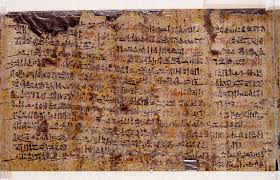
For the first time in over 2,000 years, we are now able to read the classic Greek and Roman literature, which has now opened up a whole new window to the ancient world for us. There is a collection at Oxford called the Oxyrhynchus Papyri, which includes many great writings by Homer, Sophocles, and Euripides. They have used multi-spectral imaging to uncover the texts which include parts of a lost tragedy by Sophocles, a novel by Lucian, and an epic poem by Archilochos. What the researchers hope to gain from this is to rediscover important classical writings and lost Christian gospels which have not made it into the New Testament. This is the first time they are using this technique on non-carbonized ancient manuscripts on papyrus, which is the paper of the ancient world.
Tuesday, May 11, 2010
Wednesday, May 5, 2010
Three dead as Greece protest turns violent

Greek protests have turned violent as protesters set fire to a bank in Greece earlier today killing three people. The protesters set fire to the bank on account of a general strike planned over the austerity measures. The mayor of Athens called the act a "murderous act" which will have repercussions. They are also over the tax rises even though there is a planned 110 billion Euro bailout for the Greek economy. Only time and actions will decide the outcome of this crisis. If not dealt with carefully, this could explode into a more dangerous and dire situation.
Brabant, Malcolm. "BBC News - Three Dead as Greece Protest Turns Violent." BBC NEWS | News Front Page. 05 May 2010. Web. 05 May 2010.
Tuesday, May 4, 2010
Top Ten Reasons To Take Latin
1) Impressive credentials for any kind of job!
2) "Because of its great breadth for embracing as it does logical thinking, precise analysis, lucid expression and with its overview of human thought and development, history, economics, business and politics, Classics constitutes the single best preparation in general sense for almost any of life's available pursuits!" -Founder of a middle school
3) "I appreciate having studied the Classics so much that I wish that I had the power to influence/persuade the curriculum writers in my district to make the study of Latin mandatory for all students who are seriously college bound. I see the study of Latin as one possible remedy for the plummeting SAT verbal scores." -English teacher
4) "Latin definitely has helped me. It implies some skills and character traits: attention to detail, knowledge of how languages work, good vocabulary, good writing skills, worldly outlook ...and maybe even wisdom." -Medical editor
5) "Classics taught me the value of discussion without argument; taught me to listen and appreciate other points of view." -Dentist
6) "I found law school a breeze because of the discipline and hard work habits I developed in Classics. My awareness of linguistic processes and details is a constant strength in reading, and thinking." -Law school/Texas Legislature
7) "...strong vocabulary and the ability to write, two qualities which are sorely lacking in many medical students. Practically any term in medicine comes from Latin or Greek, which allows me to memorize complicated words or phrases more easily." -Medical student
8) "Improved vocabulary, confidence in front of people, better writing techniques. Key item: The discipline I learned has been a critical success factor, especially in the U.S. Military." -Retired military
9) "Classics gives a perspective on life of beauty and greatness of the Roman and Greek cultures--arts, philosophy, literature, leadership, etc." -Owner of business consulting firm
10) "You acquire a certain logic and intuitive sense about language." -Newspaper editor
According to the results of the 2002 SAT scores the averages for the students of these languages were:
1)Latin: 666
2) French:637
3)Spanish:581
4)German:622
Obviously Latin is the root of all Romance languages, opening up students to the ability of being able to learn other languages at an exceedingly able rate. Because most words have Latin and Greek roots or prefixes, students are able to pick up the meanings of words faster, therefore giving them a way to score better on the language portion of the SAT's.
Site
Saturday, May 1, 2010
Horace, Ovid, or Catullus
Three of the greatest poets of all time the Roman poets Horace, Ovid, & Catullus shared the fame of the modern poets of their day. Horace enjoyed perhaps the greatest of fame with the people of Rome especially the upper class as he did not tend to write about anything that could possibly create any discrepancies among the people. Unlike Ovid and Catullus he did not use any vulgar language but did write about the everyday events with philosophical meanings whereas the other two seemed to write in a more blatant manner when writing about everyday events. Catullus is my favorite poet by far because of how he wrote blatantly with a sort of hidden meaning behind it as well. The way he used the same beat every line along with writing in an understanding way is purely genius. The stories he writes are also very entertaining as well, and these combined are what wins me over with Catullus' writing.
Subscribe to:
Posts (Atom)
