King Priam- Priam was the Kin of Troy for ten years and during the Trojan War. It was his fate that he should ruin his country, his family, and himself.
Polyxena- Polyxena was the youngest daughter of Priam and Hecuba. During Hector's burial, Achilles spotted her and immediately fell in love with her. She was ultimately the reason that Achilles died because she was the bait for the trap in which Achilles ended up dying.
Summary: Catullus must like the idea of running, because he has used it quite a lot. In this instance he says that she should run like Achilles should have instead of walking into the trap that was laid before him with Polyxena as the bait. Love was his downfall.
Monday, March 8, 2010

PartXXXVI-Catullus64
Dardanelles-
Scamander River-
Summary: Catullus yet again expands upon the idea that she should run, like the citizens should have ran from Achilles and how she should seperate the rivers of life to explore virtue.
Scamander River-
Summary: Catullus yet again expands upon the idea that she should run, like the citizens should have ran from Achilles and how she should seperate the rivers of life to explore virtue.
Sunday, March 7, 2010
PartXXXV-Catullus64
Phrygian Fields- 
Teucrian- The citizens of Troy, which was made famous by Homer's epic the Illiad.
Pelops- Pelops was the son of Tantalus and the grandson of Zeus. When he was just a boy his father cut him up, put him in a stew and then served him as a feast to hte gods. The gods detected the trick, though, and restored Pelops to life. Though, his shoulder had been eaten by Demeter they just replaced it with ivory. He became even more beautiful than before his restoration adn Poseidon, who fell in love with him, gave him his own chariot.
Summary: Catullus continues to expand upon the idea that this woman should run just as the citizens of Troy should have before their city was destroyed, and just as Achilles should have done to not be killed.
Teucrian- The citizens of Troy, which was made famous by Homer's epic the Illiad.
Pelops- Pelops was the son of Tantalus and the grandson of Zeus. When he was just a boy his father cut him up, put him in a stew and then served him as a feast to hte gods. The gods detected the trick, though, and restored Pelops to life. Though, his shoulder had been eaten by Demeter they just replaced it with ivory. He became even more beautiful than before his restoration adn Poseidon, who fell in love with him, gave him his own chariot.
Summary: Catullus continues to expand upon the idea that this woman should run just as the citizens of Troy should have before their city was destroyed, and just as Achilles should have done to not be killed.
PartXXXIV-Catullus64
Summary: The Moirai continue to tell her to run because her love will turn out to be as tragic as Peleus and Thetis wedding or as tragic as Achilles death in the Trojan War.
PartXXXIII-Catullus64
Emathia- The earliest poetic name for Macedonia.

Achilles- The Greek hero of the Trojan War. The son of Peleus, king of Thessaly, and the sea-goddess Thetis. He was dipped into the river Styx and the only part left untouched by the immortal effect was his Achilles tendon, which is where he got shot with an arrow and died.
Summary: Then Catullus writes that the Moirai told Peleus to run far away to get away from Crete and that she will be rewarded and somehow made up for what treachery was committed against her.
Achilles- The Greek hero of the Trojan War. The son of Peleus, king of Thessaly, and the sea-goddess Thetis. He was dipped into the river Styx and the only part left untouched by the immortal effect was his Achilles tendon, which is where he got shot with an arrow and died.
Summary: Then Catullus writes that the Moirai told Peleus to run far away to get away from Crete and that she will be rewarded and somehow made up for what treachery was committed against her.
PartXXXII-Catullus64
Summary: Catullus is describing one of the Moirai who is decided the fate of man particularly Theseus and his lover on the shore of Crete. The woman is also threading the wool to make something.
PartXXXI-Catullus64
Apollo- The son of Zeus and Leto, and the twin brother of Artemis. Apollo was the god of music, prophecy, colonization, medicine, archery, poetry, dance, intellectual inquiry, the carer of herds and flocks, the god of light (known as "Phoebus"), the god of plague, the destroyer of rats and locust, and in Homer's Iliad, Apollo shot arrows of plague into the Greek camp.
Mount Idrus-
Moirai- The three Fates, they were the destiny of man. they were assigned to every person for his or her share in the scheme of things. The three were Klotho, Atropos, and Lachesis. They were often lame to show the slow march of fate.
Summary: Catullus writes that the gods sit at the judgment table and eat while the Moirai do their earthly biddings of earth to decide the fate of man.
Mount Idrus-
Moirai- The three Fates, they were the destiny of man. they were assigned to every person for his or her share in the scheme of things. The three were Klotho, Atropos, and Lachesis. They were often lame to show the slow march of fate.
Summary: Catullus writes that the gods sit at the judgment table and eat while the Moirai do their earthly biddings of earth to decide the fate of man.
PartXXX-Catullus64
Phaethon- The son of the Sun God, he asked his mother proof of his divine heritage and was sent to the courts where he was to ask his father to grant his favor. He drove the chariot and lost control, and was destroyed by Jupiter so that Earth would not combust into flames.
Prometheus- One of the seven Titans, he was the wisest among his race and gave humans arts and sciences. also when Jupiter first withheld fire, Prometheus stole it from the chariot of the Sun. Jupiter had Prometheus chained to the frozen rock in the Caucasus Mountains where a vulture tore at his liver night and day for eternity.
Summary: The gifts are laid out and someone is coming with the revenge of Prometheus in them to take their revenge on the person who caused them discord.
Prometheus- One of the seven Titans, he was the wisest among his race and gave humans arts and sciences. also when Jupiter first withheld fire, Prometheus stole it from the chariot of the Sun. Jupiter had Prometheus chained to the frozen rock in the Caucasus Mountains where a vulture tore at his liver night and day for eternity.
Summary: The gifts are laid out and someone is coming with the revenge of Prometheus in them to take their revenge on the person who caused them discord.
PartXXVIX-Catullus64
Penios- 
Doric (ethnicity)- The Dorians were an ancient Greek tribe who lived in the North-Eastern part of the Greek Peninsula. They were then driven to the coast of Asia Minor by the Macedonians and Aegians.
Summary: Catullus writes that he is then sent into the pleasant valley of Penios which is abundant with plant life and Doric dancers and it seems like the placed were touched by king Minos himself.
Doric (ethnicity)- The Dorians were an ancient Greek tribe who lived in the North-Eastern part of the Greek Peninsula. They were then driven to the coast of Asia Minor by the Macedonians and Aegians.
Summary: Catullus writes that he is then sent into the pleasant valley of Penios which is abundant with plant life and Doric dancers and it seems like the placed were touched by king Minos himself.
PartXXVIII-Catullus64
Chiron- Chiron is the civilized Centaur who trained several famous disciples, being known for his wisdom and justice. Chiron, who was not a drunkard like other Centaurs, never used his weapons against a man. His home is Mount Pelion.
Mount Peleus-
Summary: The goddess of Dawn then brings the soft wind which then turns into a harder wind to try and bring down Theseus. Then Chiron brings down gifts from Mount Pelion.
Mount Peleus-
Summary: The goddess of Dawn then brings the soft wind which then turns into a harder wind to try and bring down Theseus. Then Chiron brings down gifts from Mount Pelion.
PartXXVII-Catullus64
Summary: Catullus says that others were making sounds such as beating brass drums and were clasping the bedspread and were making their way for the gods who were to come after them.
PartXXVI-Catullus64
Bacchus- The Roman god of Wine, and was the Roman version of the Greek god Dionysus. He was the son of Jupiter and carries a wand tipped with a pine cone. The Maenads and Satyrs followed him carrying ivy-twined fir branches as thyrsi.
Satyrs- In Greek mythology the Satyrs are deities of the woods and mountains. They were demi-gods with the legs, hooves, and horns of goats and attended on the god Bacchus.
Mount Nysa-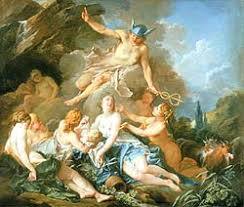
Maenads- The female followers of Bacchus.
Summary: Catullus says that Bacchus and his followers were greatly upset by this happening and that they were shaking their spears in anger over what had happened to Theseus.
Satyrs- In Greek mythology the Satyrs are deities of the woods and mountains. They were demi-gods with the legs, hooves, and horns of goats and attended on the god Bacchus.
Mount Nysa-
Maenads- The female followers of Bacchus.
Summary: Catullus says that Bacchus and his followers were greatly upset by this happening and that they were shaking their spears in anger over what had happened to Theseus.
PartXXV-Catullus64
Summary: Catullus then said that despite these earlier promises, Theseus boat began to get rocked by the wind and waves. His father began to weep as he watched form the walls of the Citadel of Athens, and then Theseus died and Phaedra began to weep at his death.
PartXXIV-Catullus
Erectheus- The King of Athens, he was a benevolent ruler and the re-founder of the polis. Athenians thought themselves sons and daughter of Erectheus because of his huge impact on the Athenian society.
Summary: Catullus says that Athena has promised to Aegus to protect his son Theseus and to help him kill the Minotaur. And he will also be safely guided to home where he will be happily greeted by his father Aegus.
Summary: Catullus says that Athena has promised to Aegus to protect his son Theseus and to help him kill the Minotaur. And he will also be safely guided to home where he will be happily greeted by his father Aegus.
PartXXIII-Catullus64
Summary: Catullus says that Aegus is not happy to let Theseus go because he is getting old and he wants to spend what time he has left with his son in safety, and he also just doesn't want to see his son in danger.
PartXXII-Catullus64
Aegeus- The father of Theseus, King of Athens, saved him from the poisoned death by Madea because he recognized his sword that he had hidden under the rock. The Aegean Sea was also named after him.
Summary: Catullus says that Theseus had forgotten to tell his father Aegus that he had a safe journey, and told Theseus to return to him safely.
Summary: Catullus says that Theseus had forgotten to tell his father Aegus that he had a safe journey, and told Theseus to return to him safely.
PartXXI-Catullus64
Summary: Catullus writes that she is angry and hates Theseus from the depths of her heart and hopes that something equally bad will happen to him because he assisted in the murder. After she said this the earth and seas began to shake.
PartXX-Catullus64
The Furies- In Greek mythology, the Erinýes, they were female deities of vengeance and chaos representing the anger of the dead. They often haunt their prey, who are the people that committed or assisted in some sort of murder, and either drive them into a craze to kill themselves or kill them themselves.
Summary: Catullus then says that she knows she will get a visit from the furies because of her assistance in the murder of her brother of the minotaur, and she invites them to come because she wants to end her life.
Summary: Catullus then says that she knows she will get a visit from the furies because of her assistance in the murder of her brother of the minotaur, and she invites them to come because she wants to end her life.
PartXIX-Catullus64
Mount Ida- 
Summary- Catullus investigates whether or not she should be more upset over the fact that she helped kill her brother or be upset that she helped the man that just left her and was the love of her life.
Summary- Catullus investigates whether or not she should be more upset over the fact that she helped kill her brother or be upset that she helped the man that just left her and was the love of her life.
PartXVII-Catullus64
Summary: Catullus continues to talk about how she wishes Theseus' boat had not touched the shores of Crete and destroyed her life. She says that him leaving just mocks her.
PartXVI-Catullus64
Syrtis- Quicksands and shoal water off the coast of North Africa.
Scylla- The daughter of Phorcys she was remarkable because of her beauty. Circe changed her into the Render and she seized sailors and cracked their bones before slowly swallowing them.
Charybdis- The whirlpool between Italy and Sicily in the Messenian straits. She was the daughter of Mother Earth and Neptune.
Summary: Catullus then continues to talk about how she can't believe she fell for him and asks what force of nature spat him up and let such a man walk the earth and let him do this to her.
Scylla- The daughter of Phorcys she was remarkable because of her beauty. Circe changed her into the Render and she seized sailors and cracked their bones before slowly swallowing them.
Charybdis- The whirlpool between Italy and Sicily in the Messenian straits. She was the daughter of Mother Earth and Neptune.
Summary: Catullus then continues to talk about how she can't believe she fell for him and asks what force of nature spat him up and let such a man walk the earth and let him do this to her.
PartXV-Catullus64
Summary: Catullus talks about her anger again and how men are not afraid to break an oath with a woman. She never failed him when she helped him kill her brother, but now he fails her by leaving her on the island of Crete.
PartXIV-Catullus64
Summary: Catullus again explains Phaedra's outrage at Theseus because he left even though he promised to be with her forever. She now does not have his sweet voice and she cannot trust a man again.
PartXIII-Catullus64
Summary: Catullus describes how Phaedra is very upset with the way Theseus left her with nothing, but her love for him. She yells at him for leaving because he did it for the will of the gods.
PartXII-Catullus64
Phaedra&Pasiphae- Phaedra was the daughter of Minos and the wife of Theseus, but she soon fell in love with Hippolyta. Pasiphae was daughter of Helios and Perse, and wife of King Minos. She was the mother of Glaucus, Andogeus, Phaedra, and Ariadne. When Minos insulted Poseidon, the god started a passionate love in Pasiphae for a bull. She had Daedalus design a construction so that she could mate with the bull, therfore she became the mother of the Minotaur.
Summary: Catullus talks about how Phaedra embraces Pasiphae one last time because of her love with Theseus. And then he talks about how Theseus left her at the shores breaking her heart.
Summary: Catullus talks about how Phaedra embraces Pasiphae one last time because of her love with Theseus. And then he talks about how Theseus left her at the shores breaking her heart.
PartXI-Catullus64
Summary: Catullus then describes how Theseus killed the Minotaur and how it threw its horns into the air taking its last breaths.
PartX-Catullus64
Summary: Catullus talks about how Cupid mixes with people's feelings and plays with their emotions for fun. He then talks about how Adriane misses him because she misses the feeling she gets when he would fight the Minotaur for her so she put her prayers up to the gods for him.
PartVIIII-Catullus64
Androgeos- The son of Minos (king of Crete), and was murdered by Aegeus in Greece because of his great success at the Panathenaic Games.
The Minotaur- The Minotaur was the half-bull half-man born of the union of Pasiphae, Minos’s wife, with a bull. Theseus destroyed it at the heart of the Labyrinth (built by Daedalus), with help from Ariadne.
Summary: Catullus continues to talk about Adriane's deep passions being drawn up from within her about her love Theseus.
The Minotaur- The Minotaur was the half-bull half-man born of the union of Pasiphae, Minos’s wife, with a bull. Theseus destroyed it at the heart of the Labyrinth (built by Daedalus), with help from Ariadne.
Summary: Catullus continues to talk about Adriane's deep passions being drawn up from within her about her love Theseus.
PartVIII-Catullus64
Piraeus- The harbor of Athens that was about three miles in distance from the city. It was and still is one of the largest harbors on the Mediterranean.
Crete- Home of King Minos and his son the Minotaur who lived in the labyrinth. The palace of Knosos was at the center of the island, and dominated the Cretan landscape. The island was south of Greece.
Summary: Catullus explains that when Crete would suffer from disease, famine or any other natural disaster they would take Athenian citizens and feed them to the Minotaur to try and appease the gods.
Crete- Home of King Minos and his son the Minotaur who lived in the labyrinth. The palace of Knosos was at the center of the island, and dominated the Cretan landscape. The island was south of Greece.
Summary: Catullus explains that when Crete would suffer from disease, famine or any other natural disaster they would take Athenian citizens and feed them to the Minotaur to try and appease the gods.
PartVII-Catullus 64
Summary: Catullus explains how she lets go of her cloak and exposes her breast. She lets go of her cloak and headdress because she cares not for them anymore, but cares only for Theseus who left her in the first place.
PartVI-Catullus64
Summary: Catullus then describes how Adriane watched Theseus leave her on the shore and she is saddened by what she sees. She watches him leave like the statue of Maenad, because she is still.
ParV-Catullus
Theseus&Adriane- Theseus was the King of Athens, and was almost killed by Medea by way of poison but was stopped because Aegus recognized his son by his sword. He also killed the Cretan Minotaur. Adriane was the sister of the Minotaur and she helped Theseus on Crete to kill the Minotaur. She was abandoned eventually by Theseus.
Summary: He then talks about all the gifts that Peleus has in his room from the wedding and compares it to Adriane being abandoned at the Shores of Crete by Theseus.
Summary: He then talks about all the gifts that Peleus has in his room from the wedding and compares it to Adriane being abandoned at the Shores of Crete by Theseus.
PartIV-Catullus64
Cieros&Phthiotic Tempe-Cieros is a town in Thessaly. Phthiotic Tempe was the beautiful valley in Thessaly, between Mount Olympus and Mount Ossa through which the River.
Crannon&Larissa- Crannon was a central town in Thessaly, and a battle here ended a rebellion in Greece. Larissa is a town in Thessaly on the River.
Pharsalus- The Battle of Pharsalus was the battle in Pharsalus, Greece in which Julius Caesar obliterated Pompey's forces.
Summary: Then he says that no food was growing from the plowed fields of Pharsalus.
Crannon&Larissa- Crannon was a central town in Thessaly, and a battle here ended a rebellion in Greece. Larissa is a town in Thessaly on the River.
Pharsalus- The Battle of Pharsalus was the battle in Pharsalus, Greece in which Julius Caesar obliterated Pompey's forces.
Summary: Then he says that no food was growing from the plowed fields of Pharsalus.
Part III- Catullus64
Thessaly- 
Tethys&Alcinous- Tethys was a titaness and an aquatic sea goddess. She was the sister and wife of Oceanus and the mother of chief rivers. Alcinous was the queen of Deprane where Jason was warmly received during the chase of the Colchians.
Summary: Catullus asks Peleus if he deserves Thetis by asking if he embraced her, if Jupiter would let him marry her or if Oceanus would embrace him. Then he says that all of Thessaly is coming to see their wedding.
Tethys&Alcinous- Tethys was a titaness and an aquatic sea goddess. She was the sister and wife of Oceanus and the mother of chief rivers. Alcinous was the queen of Deprane where Jason was warmly received during the chase of the Colchians.
Summary: Catullus asks Peleus if he deserves Thetis by asking if he embraced her, if Jupiter would let him marry her or if Oceanus would embrace him. Then he says that all of Thessaly is coming to see their wedding.
Part II- Catullus64
Nereids- The fifty daughters of Nereus and Doris who lived in the Mediterranean Sea. They helped sailors through rough storms and were also believed to prophesize. They were also a part of Poseidon's retinue.
Peleus&Thetis- Thetis was a nymph who captured Zeus attention because of her beauty. He couldn't have a child with her though because it was foretold that the son would grow so powerful that he would be able to overthrow Zues, much like Zues did with his father Cronos. So he made Thetis marry a mortal, Peleus grandson of Zeus, instead so that Zeus could not be overthrown. Their wedding brought on the Trojan War.
Summary: Catullus then talks about the Argonauts ships first voyage and how the Nereids were encountered on their voyage. It then jumps to the wedding of Peleus and Thetis for the beginning of the Trojan War.
Peleus&Thetis- Thetis was a nymph who captured Zeus attention because of her beauty. He couldn't have a child with her though because it was foretold that the son would grow so powerful that he would be able to overthrow Zues, much like Zues did with his father Cronos. So he made Thetis marry a mortal, Peleus grandson of Zeus, instead so that Zeus could not be overthrown. Their wedding brought on the Trojan War.
Summary: Catullus then talks about the Argonauts ships first voyage and how the Nereids were encountered on their voyage. It then jumps to the wedding of Peleus and Thetis for the beginning of the Trojan War.
Tuesday, March 2, 2010
Monday, March 1, 2010
Part 1- Catullus 64
Mount Pelion- 
Neptune- Neptune was god of the sea and was akin to the Greek god Poseidon but not exactly identical. He originally comthe directions of es from the Etruscan god Nethuns, but it wasn't until he was dedicated a book by Sibylline that the name came up. Neptune was associated as well with fresh water, as opposed to Oceanus, god of the world-ocean. Like Poseidon, Neptune was also worshiped by the Romans as a god of horses, under the name Neptune Equester, patron of horse-racing.
Phasis- The City of Colchis, at the mouth of the river Rion along the shore of the Black Sea. It was the capital of the kingdom of Æetes, who was a son of Helios and a brother of Circe.
Argives- A term referring to a person who lives in the city of Argos, Greece. In the writings of Homer it refers to the soldiers who besieged Troy.
Golden Fleece- The treasure sought by Jason and the Argonauts, it came from Nephele who sent a golden ram instead of Phrixus having to be sacrificed to appease Ion. Phrixus and Helle were then transported by the flying ram to safety, but Helle fell off and landed at Hellespontand Phrixus landed safely at Colchis , married the daughter of King Aeetes, sacrificed the ram to Zeus and gave its fleece to the King.
Athena Polias- The defender of Athens, this variant of Athena was specially created by the Athenians and they viewed her as their protector. She was the goddess of warfare but also, when combined with Pallas, carried a martial status as well.
Argonauts- A band of heroes before the Trojan War and accompanied Jason to Colchis. Their name comes from the name of their ship, Argos, which was named after its builder, Argus. There were 49 of them in all and are depicted in Homer's epics.
Summary: The Argonauts are embarking on their journey to retrieve the golden fleece from Colchis in their boat the Argus and are being watched over by the goddess Athena.
Neptune- Neptune was god of the sea and was akin to the Greek god Poseidon but not exactly identical. He originally comthe directions of es from the Etruscan god Nethuns, but it wasn't until he was dedicated a book by Sibylline that the name came up. Neptune was associated as well with fresh water, as opposed to Oceanus, god of the world-ocean. Like Poseidon, Neptune was also worshiped by the Romans as a god of horses, under the name Neptune Equester, patron of horse-racing.
Phasis- The City of Colchis, at the mouth of the river Rion along the shore of the Black Sea. It was the capital of the kingdom of Æetes, who was a son of Helios and a brother of Circe.
Argives- A term referring to a person who lives in the city of Argos, Greece. In the writings of Homer it refers to the soldiers who besieged Troy.
Golden Fleece- The treasure sought by Jason and the Argonauts, it came from Nephele who sent a golden ram instead of Phrixus having to be sacrificed to appease Ion. Phrixus and Helle were then transported by the flying ram to safety, but Helle fell off and landed at Hellespontand Phrixus landed safely at Colchis , married the daughter of King Aeetes, sacrificed the ram to Zeus and gave its fleece to the King.
Athena Polias- The defender of Athens, this variant of Athena was specially created by the Athenians and they viewed her as their protector. She was the goddess of warfare but also, when combined with Pallas, carried a martial status as well.
Argonauts- A band of heroes before the Trojan War and accompanied Jason to Colchis. Their name comes from the name of their ship, Argos, which was named after its builder, Argus. There were 49 of them in all and are depicted in Homer's epics.
Summary: The Argonauts are embarking on their journey to retrieve the golden fleece from Colchis in their boat the Argus and are being watched over by the goddess Athena.
Sunday, February 28, 2010
Ashmolean Museum

The Ashmolean Museum in Oxford has a rather large collection of paintings, finger rings, Roman coins, Silver and watches. The first opening of the Museum in 1683 and was open to the entire public. Presented by Elias Ashmole and charged a public fee and the museum included natural and man made specimen from across the known world, and it became and instant hit. The museum's success has grown since.
http://www.ashmolean.org/about/historyandfuture/
Museum of London's Golden Coins

A horde of Roman coins have been discovered in London and are no on display in the London Museum. At Plantation Place in London, Museum of London archaeologists excavated 43 coins from a wooden deposit box under the floor of a wealthy Roman London residence.The Romans introduced a currency system into Britain based on three metals: the aureus of gold, the denarius of silver and lower denominations of copper alloy. This valuable hoard consists solely of gold aurei, coins never in everyday circulation but used by administrators, bankers or rich merchants.
http://www.museumoflondon.org.uk/archive/exhibits/coins/index.htm
Priscus

Priscus was from Panium during the 5th Century A.D. HE was a diplomat, a sophiast, and a historian. He accompanied Maximinus , the ambassador to Theodosius, to the court of Attila in 448. During the reign of Emperor Marcian he also took part in missions to Arabia and Egypt. He also wrote and eight volume book called "History" which was about the ascension of Attila to Zeno. His work is largely preserved in Byzantine excerpts and the account about the court of Attila is almost perfect,
http://en.wikipedia.org/wiki/Priscus
Friday, February 26, 2010
Pigiorini Museum

The Pigorini Museum in Rome houses two floors of artifacts, some of which date all the way back to almost 500B.C. This museum is a part of the band of European museums. Below is some information about the museum.
The Museum Today
The Pigorini Museum is now organized in two branches: Ethnography and Prehistory. The first one, at the first floor, devoted to the important ethnological collection from Africa, Oceania and recently too America (partly again in progress); meanwhile the last section - Asia - is planned for 2006.
The Prehistory
The prehistoric exhibition, at the second floor, starts with an introductory section conceived as an explanation of the stratigraphic approach in modern archaeological research, realized throw suggestive reconstructions of true archeosurfaces and goes on with the so called 'Evolution Box', an innovative tool of communication that is actually the 'blockbuster' of our young visitors. A more classic exposition of the prehistoric collections is presented in the following parts of the Museum, with several thousand of objects and contexts from the major Italian and European sites.
The Public
The public of the Pigorini Museum - around 40.000 visitors each year - comprises mainly scholars and prehistory-fans, with well oriented interests on certain items in the exhibited collections or in the deposits, and alumni of the low and high schools, as shows the monitoring of the visiting flows during the year with clear peaks in the winter and autumn months.
http://www.europeanvirtualmuseum.it/museum/repertimuseo2.asp?museo=Rome
Greece Virtual Museum

The National Archaeological Museum of Athens is the largest archaeological museum in Greece and one of the most important museums in the world devoted to ancient Greek art.It was founded at the end of the 19th century protect antiquities from all over Greece displaying historical, cultural and artistic value. In its galleries are long evolution of ancient Greek culture. The Museum's Collections include Prehistoric, Sculpture, Vases and the Minor Arts, Bronze, and Egyptian Antiquities.
http://www.europeanvirtualmuseum.it/museum/repertimuseo2.asp?museo=Athens
Virtual Egyptian Museum
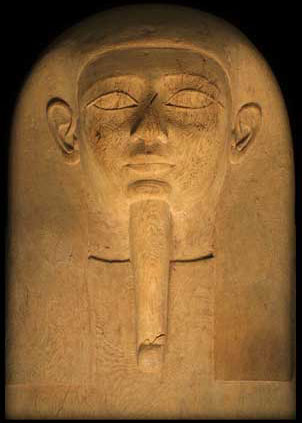
The Egyptian Museum brings collection of antiquities never shown before in the New World. No one has seen any of these artifacts in a “real museum” for the past 25 years. It includes images, side commentaries, and interactive reference tools they prepared will take one on a different kind of exploration of ancient Egypt—the most stable, enduring society in the story of mankind.
http://www.virtual-egyptian-museum.org/
Thursday, February 25, 2010
Poetry In Highschool?

Poetry is a main course in many high schools as a result of the pure essence of importance it holds in people's lives. Poetry comes in more than the regular rhyming scheme prose that people always think of; instead it appears daily in everyone's life. without understanding of the mechanics of poetry, we cannot understand ancient writings and therefore will not be able to understand history. Also, poetry is an expression of one's culture, and therefore it differs vastly from other cultures. By gaining an understanding of how the author uses poetry, one can gain knowledge of the history of that culture to learn about it to its fullest extent. Without learning poetry a student cannot understand history, religion, or even science in some ways as well. As much as I hate to say it, poetry should be taught in every school.
Catullus or Horace?

I prefer Catullus because he has a lot more satire in his poems and he is more down to earth than Horace. Horace's poems are very good but they are harder to translate because he tends to run on in his sentences; making finding the verb harder than it should be. Horace's poems have a very good message as well, and tend to be outright philosophical whereas Catullus hides his philosophy in his satire which in some ways makes him the wiser of the two. Overall Catullus humor and stories win me over hands down.
Definition of Poetry
Poetry-
noun
1.
the art of rhythmical composition, written or spoken, for exciting pleasure by beautiful, imaginative, or elevated thoughts.
2.
literary work in metrical form; verse.
3.
prose with poetic qualities.
4.
poetic qualities however manifested: the poetry of simple acts and things.
5.
poetic spirit or feeling: The pianist played the prelude with poetry.
6.
something suggestive of or likened to poetry: the pure poetry of a beautiful view on a clear day.
In my own opinion I believe poetry is an expression of emotion about an event or happening in aperson's life.
noun
1.
the art of rhythmical composition, written or spoken, for exciting pleasure by beautiful, imaginative, or elevated thoughts.
2.
literary work in metrical form; verse.
3.
prose with poetic qualities.
4.
poetic qualities however manifested: the poetry of simple acts and things.
5.
poetic spirit or feeling: The pianist played the prelude with poetry.
6.
something suggestive of or likened to poetry: the pure poetry of a beautiful view on a clear day.
In my own opinion I believe poetry is an expression of emotion about an event or happening in aperson's life.
Berlin Museum

Dating all the way back to 15000B.C. these artifacts are priceless. Housed in Berlin, the 175 year old museum has every reason to be proud. It survived, despite destruction from World War II, and has continued the destruction for years and hopefully will continue the tradition for years to come. Below is some more information about the museum.
In six exhibition rooms the Prehistoric cultures of Europe and Middle East are presented. Apart from the famous Schliemann collection of Trojan antiquities archaeological remains from the Cypriote area and Middle East are shown on the ground floor. The exhibition on the first floor guides the visitor through a chronological tour from the early Stone Age to the Middle Age. The highlights of the collection are objects of the early Stone Age art, the "Berlin Gold Hat", the Iron Age cuirass of Sticna, objects of roman glass art or splendid jewellery of the Early Middle Age.
http://www.europeanvirtualmuseum.it/berlin.htm
Wednesday, February 24, 2010
Story
John Marshal awoke to the sound of his alarm early on a Friday morning. He groggily gained consciousness, and realized the sad recurrent day ahead of him. He punched the alarm, and tossed the covers off his body and walked to the bathroom. As he looked in the mirror during his shave he was greeted by the same fatigued person he had known for the past seven years. Ever since he had taken his job as a doctor at Upper Chesapeake, he had been hounded by late night calls from the overcrowded emergency room. As he finished his shave, he sauntered to his bedroom to dress in the same attire he had known for what it seemed eternity. He just wanted something exciting to happen in his life; something to break his drone of a life and get him into the field of something more excited. He was tired of getting the same cases in his clinic over and over again, and wanted to explore the breathtaking experience of life. He looked at the picture of a vacation spot he had planned to go on about 2 years ago, but had been canceled ever since the breakout of avian flu hit the United States and his job hard. He looked at it with the intensity of almost being there and he closed his eyes and imagined what an exhilarating experience it would have been, and he felt a rush along with a brush of wind over his exposed skin. He opened his eyes reluctantly to what he expected to be the world he had always known, but was greeted with the voices and bustle of the streets of Oslo, the vacation spot that had been taken away from him so long ago. He closed his eyes again to see if he was hallucinating, but he found the experience to be as authentic as he had before he closed his eyes. H quickly ran up the street, dodging traffic and construction obstacles in his way. John ran to the nearest store to try and grasp what he thought was a trance. The response from the shopkeeper was a jumble of words in a deep northern European accent. He tried to grasp what was going on but couldn't. He backtracked to try and target where and how he had started to travel. Then he remembered, it was the picture; yes it was definitely the picture. He decided to try it out again and looked at the picture of a Fortune 500 magazine, seeing one of the newest built penthouses of Mr. Toyota in Tokyo. He closed his eyes, and he again shuttered as the wind rushed him to the next location. He landed on the mat that looked similar to the one he had taken yoga on some years back. He looked around the room and saw articles of Mr. Toyota's accomplishments through the years, and his rise to the top of the chain of the car industry. He walked quickly into the next room, only to be greeted by the stares of hundreds of Pokémon figures from the selves that lined the room. This was the most scared that John had been in a long time. He fled the room only to run right into a Yu-Gi-Oh statue and passed out. When he awoke, he was met by the stare of one of Mr. Toyota's guards in their unusual outfits; Pokémon outfits. He was escorted out by the guard and kicked out into the bustle of a wave of short people outfitted with strange anime clothing. He was lost and upset, he felt like crying but he couldn't find an alley to enter the feedle position because not a square foot was unused. He had to find a magazine, and quick. He stumbled into a consignment shop and found a magazine in Japanese, but could still make out the picture of the top hospitals in America. Obviously Upper Chesapeake wouldn’t be on there but he could sure find John's Hopkins. He walked outside only to find a pile up of Toyota Priuses. Good old Japanese engineering had cause the electrical breakdown in the cars, and people were flying everywhere from the uncontrollable car. Then he saw it, a small lunchbox looking car, hurtling toward him while he frantically paged through the magazine trying to find John's Hopkins. He found it millimeters before the car hit him and he felt that euphoric feeling again, and was dropped into the center of John's Hopkins visitor center. He was home again.
Monday, February 22, 2010
Plutarch

Plutarch was born around 46A.D. in Cahaerona, Boeotia. He came from a wealth family and eventually served as a priest a the temples of Apollo and Delphi. From his writings he soon became a sensation in Rome, but he continued to live in Chaerona even serving as mayor. His writings came after the reign of Nero, Diacletian, and the Roman Civil Wars, and later inspired the Golden Age of Nerva, Trajan and Hadrian. Plutarch's most famous writing, "Lives", compared lives of Roman leaders to those of Greek leaders. He ended up writing conclusions about the lessons of life and his writings have survived since. Plutarch later died around 120A.D. in Delphi.
http://www.e-classics.com/plutarch.htm
Spartacus

Sparticus was trained at the Gladiatorial school near Capua and was owned by Lentulus Batiatus. He and some 70 slaves escaped the school, stole knives from the cook and a wagon full of weapons and fled to Mount Vesuvius. his force grew quickly as other slaves joined him till his numbers grew to 120,000. Soon the Senate sent Claudius Glaber to put down the revolt. They were soon slaughtered by Spartacus forces. Spartacus defeated the two other legions sent to destroy him. They worked their way north to try and join up with the revolts in Gaul or Hispania, but instead he turned back South toward Italy. Crassus was soon sent to destroy Spartacus forces and he isolated Spartacus' army with his eight legions. Spartacus broke through the lines and fled north only for hsi force to be captured and Crucified on along the Via Appia from Rome to Brundisium and the bodies were never taken down.
http://www.paralumun.com/famspar.htm
Subscribe to:
Posts (Atom)
